

A slug fence that promises to solve all snail and slug problems—every gardener dreams of it.
In this guide, I test whether these fences live up to their claims and share practical tips on how to use them.
Slugs and snails can destroy an entire bed of young plants in a single night.
A slug fence offers a simple solution: if slugs can’t enter your beds, they can’t eat anything, and your worries are over.
Manufacturers highlight that slug fences are environmentally friendly—no poisons, no harm, yet still effective.

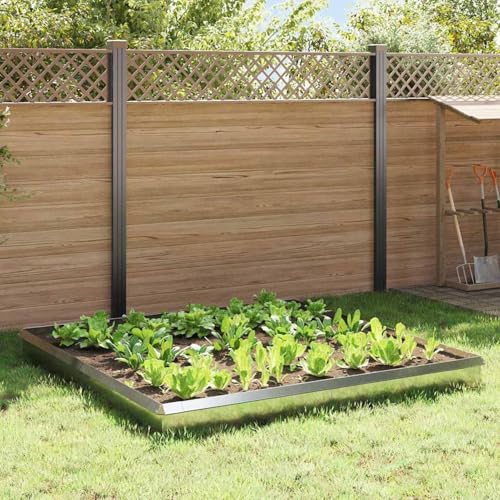
Fences made of galvanized sheet steel can be quite expensive, making them a questionable investment for many gardeners.
Is the higher price worth it, or can a budget-friendly plastic fence do the job just as well?
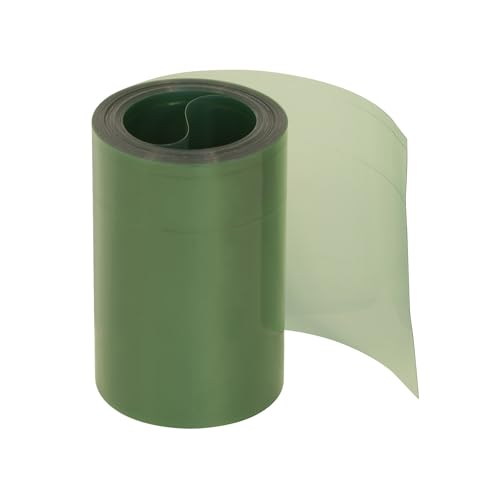
For those on a smaller budget, there are nearly identical fences made of weather-resistant plastic that claim the same level of effectiveness.
Plastic fences typically cost around a dollar/pound/euro per yard (or per meter), while metal versions run about ten dollars/pounds/euros per yard (or per meter).
Before purchasing, it’s important to ensure the fence will truly deliver on its promises.
So, how does a fence provide peaceful slug defense?

Slug Fences: Tested Products
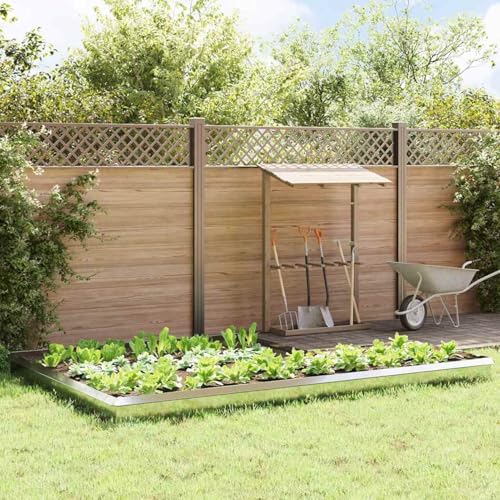
Slug Fences – Effect Guaranteed?
Slug fences work as a mechanical barrier. Their edges block slugs and snails from entering garden beds.
The specially designed double-bent edge is meant to stop these creatures from crossing into the plants.
When slugs try to overcome the edge, they often fail—and according to manufacturers, sometimes even fall, disoriented.
But how effective are these fences in real-life conditions?

Slug Fence Test
To test slug fences quickly and effectively, I created a special experimental setup.
I then collected fresh snails and slugs and conducted a practice test, recording the results on video (see below).
The test was done using a plastic fence rather than a metal one. However, the results apply equally to all slug fences that use the double-bent edge design.
For guidance on installation, you can watch a YouTube video showing the plastic fence in action.
By following each step, you’ll end up with a fence featuring an edge bent twice at 90-degree angles—the key feature of these barriers.
Video: Installation of a Plastic Slug Fence
Test Implementation
For the experiment, I constructed a small dead end using the slug fence and placed the snails in the middle.
I then recorded about 32 minutes of video (with time-lapse) to observe how the slugs and snails reacted when trying to climb over the fence.
Since my goal is to control slugs and snails without causing them harm, I ensured they were treated well and released afterward. The Spanish slugs, in particular, were resettled far away. I am opposed to animal testing and only conducted this experiment to understand natural pest behavior.
The aim was to see how the animals reacted to the bent edge and whether they could overcome it.
Transparent plastic slug fences work especially well for this type of experiment, as they allow clear video footage of how slugs and snails interact with the barrier.
Snail Fence Test No. 1: 90-Degree Edge
When building the fence, I followed the video instructions carefully.
However, I constructed it slightly differently—placing the corners on the inside rather than the outside. This way, if the fence works as intended, the slugs cannot escape.
You can see the results of this first test here:
Video: Snail Fence Test #1
This first attempt failed. Most slugs and snails avoided crawling over the fence, though the reason is unclear—perhaps the fence was still too new and smelled unfamiliar.
Impressively, one leopard slug managed to reach the other side, revealing a weakness in this type of edge.
The experiment demonstrated just how easily some slugs can “flit” over a 90-degree edge.
As a result, fences with this kind of edge proved less effective against slugs.
Slug Fence Test No. 2: 45-Degree Edge
After the first attempt failed, I tried again the next day.
This time, I bent the edge further inward, mimicking the design of the original metal slug fence.
The edge now formed an angle of about 45 degrees.
With this adjustment, the slugs were much more willing to take on the challenge.
Video: Snail Fence Test #2
With this slight adjustment, the fence successfully kept out most slugs and snails.
Only one tiny snail managed to crawl over the top, and two slugs squeezed through underneath.
The “winner” was a small grove snail. Snails are naturally better climbers than slugs, thanks to their shells, which help them grip surfaces.
Slugs usually stay close to the ground, which may explain why they cannot climb as effectively as snails that also inhabit trees.
Test Result
The 90-degree edge failed, but the 45-degree edge successfully prevented all slugs from crossing the fence.
The tapered edge managed—without harming any animals—to keep slugs at bay.
Many slugs attempted to cross, but all failed, either turning around or falling off the edge.
Only a small snail managed to get through, but since these snails pose no threat to plants, there’s no cause for concern.
This demonstrates that slug fences are an environmentally friendly solution: no slugs need to be killed to protect your vegetables.

Practical Experience
Be careful that no plants grow over the fence, as slugs can use them as shortcuts. For more details on construction and handling, see my slug fence manual.
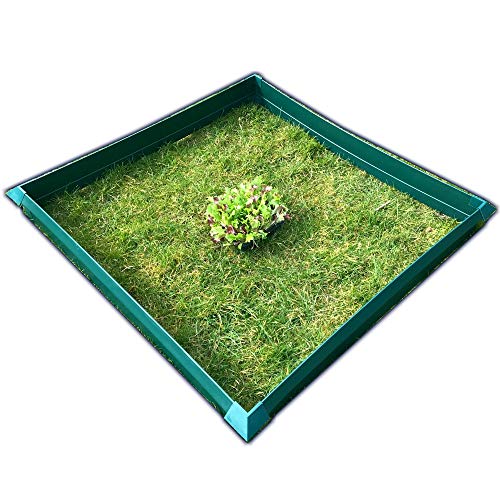
Plastic fences have a small drawback compared to metal ones: they don’t come with corner pieces, which can create a vulnerability.
If the edges are bent at 90 degrees, the corners can be trimmed and bent neatly without gaps—this is well explained in the video above.
However, when bending the edges to 45 degrees, small gaps may appear in the corners, which slugs could exploit.
You can either improvise corner solutions or accept that a few slugs might get through these weak points. With some manual skill, it’s possible to create corner pieces similar to those used in galvanized metal fences.
If you’ve had experience with slug fences, I’d love to hear your tips and observations in the comments below.
Slug Fences: Tested Products

Conclusion
The tests show that mechanical defense with a 45-degree edge works very well. In contrast, slug fences with a 90-degree edge require closer attention, as they are less reliable.
Both metal and plastic fences can be effective, but plastic fences may present issues at the corners.
If you want to be on the safe side, a metal fence is likely the better choice. Although rustproof metal fences are more expensive, they are a worthwhile investment, lasting many years.
These fences protect plants without poison or harm. Snails are gently repelled—no animals need to die, and the use of slug pellets is unnecessary. Even large garden areas can be effectively safeguarded.
For anyone who wants to defend vegetables and flowers without causing harm, I can wholeheartedly recommend investing in a slug fence.
Whether you choose to use a snail fence or not, I wish you plenty of joy in the garden and a bountiful harvest!
I always appreciate constructive comments and ideas—thank you in advance for sharing them!
Snail Fence Long-Term Test

Peaceful Slug Control & Plant Protection
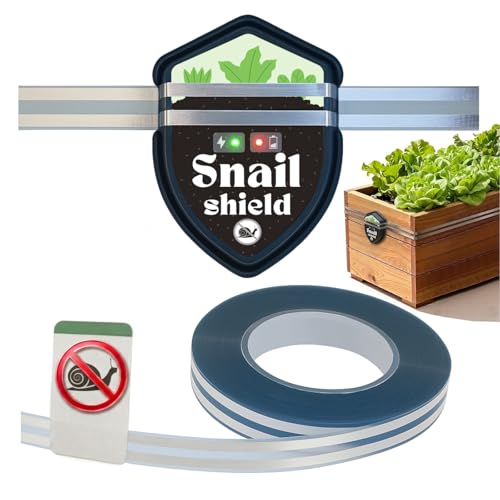


Alternative WaysYou just read about “Snail and Slug Fence”. Not every method suits every garden, so here are gentle alternatives and an overview of what works.
Overview of methods


Attract More Beneficial Wildlife to Your Garden
Turn your garden into an ark for biodiversity. Swipe or scroll sideways →


Promote Biodiversity & Strengthen Natural Balance
Slug-resistant plants


Recommendations | Natural Protection


More Recommendations | Gentle Slug Protection

Mindful consumption: Please only buy what you or your garden really need.
Did you find what you were looking for?
If that is not the case, kindly leave a message or a comment. By doing this, you will help improve the website.

- Garden Snails & Slug Control | 23+ Measures & Methods - February 1, 2023
- Snails & slugs on the balcony: Where do they come from? What to do? - January 27, 2023
- Does Garlic Help Against Snails & Slugs? | Field Test - January 26, 2023







Thank you so much for going to so much effort to show us how the slug fence works. I don’t have a slug problem but I do have some hungry snails. I was researching to see if the broken sea shells I can gather nearby are effective when crushed and scattered to form a barrier. Lovely site. No need to reply. Em
Thanks – very helpful!
Thank you so much-extremely useful. At last a way to deal with slugs!
Thank You for taking the Thyme to help me be more kind in the Garden — I refuse to kill slugs — they are Creatures also…. I deeply appreciate the effort you have taken to discover and Teach Compassionate Gardening techniques!
Thanks! I will be putting your Wisdom to work!
Loved the time lapse videos. Really interesting. Thank you
Thanks for all your hard work in writing this! Very helpful 🙂
Thanks so much for this article. I found it to be very informative. I have taken a laissez faire attitude to slugs because I realized years ago that I was torturing the poor creatures with slug bait. However, at my current home, there is an army of them, huge and happy…mainly attacking my peppers and greens. I had no idea there were slug fences until I read your article. I will definitely be seeking one next spring.
brilliant helpful thank you
So informative. Appreciate the candid comments on what can be done affirmatively and what not to waste time on.
Hi, I have to say the information & video is fantastic, thanks. I need to stop slugs / snails eating hedgehog food before & during the hogs arriving. It’s like party central & free buffet for slugs.