

Do slugs and snails really dislike touching copper? I decided to put this claim to the test.
The theory suggests that when they crawl over copper, a chemical reaction occurs, creating an unpleasant sensation on their skin. As a result, they avoid crossing copper surfaces.
However, whether this method truly works remains controversial and widely debated.
In this article, I aim to settle the question once and for all.

Click the image to see the offer on Amazon.
Copper Against Slugs: The Experiment
I applied a strip of self-adhesive copper tape to the inside of an old transparent cake cover.
Because a single strip seemed too narrow, I placed three strips side by side, creating a copper barrier about 2 inches (5 cm) wide.
Next, I collected around 30 slugs and snails and placed them inside the enclosure.
I captured what happened next in a 30-minute time-lapse video:
Video: Copper Against Slugs & Snails Test #1
As you can see, the experiment showed that the copper barrier was largely effective.
Only two slugs managed to escape; all the others were deterred by the copper.
In a way, both sides of the debate were right: copper both works and doesn’t—depending on the circumstances.
The barrier repelled all of the snails, and most of the slugs turned back immediately after making contact with the metal.
However, there were two small exceptions.
The copper used in the experiment was dry and brand new. This allows us to dismiss the assumption that copper must be wet or covered with a patina to be effective. That claim appears to be unfounded—in fact, dry copper may even work better.
The next video demonstrates how crucial the width of the copper strip is. A narrow strip that snails can easily stretch across is insufficient. Only a sufficiently wide copper barrier proves effective.
Video: Copper Against Slugs & Snails Test #2
This video makes it clear that copper—or at least copper tape—can be an effective deterrent against snails, provided the barrier is wide enough.
No repellent can guarantee complete protection, but based on this experiment, I would estimate that 80–90% were successfully deterred.
That’s already a promising result.
How is Copper used to Protect Plants?
Copper is particularly well suited for protecting flower tubs, pots, and other planters.
As shown in the video, self-adhesive copper tape can be applied quickly and easily.
Copper barriers can also be used to protect raised beds from slug and snail infestations.
Slug Control for Raised Beds, Tubs, Planters, & Pots
In general, I recommend using wide copper tape—about 2 inches (approx. 5 cm).
If you prefer narrower tape, you can place several strips side by side to create a broader barrier.
Alternatively, copper mesh can be used to form an effective slug fence. Copper wire—such as that salvaged from old copper cables—can also be shaped into individual barriers.
If you choose to use copper wire, make sure it is bare and not coated or plated.
As a rule of thumb, the wider the copper barrier, the more effective it will be. A broad strip prevents slugs and snails from simply stretching across it.
To protect garden beds with copper, the material needs to be attached securely to the bed’s enclosure to create a continuous barrier.
Slug & Snail Fence | Protective Barrier
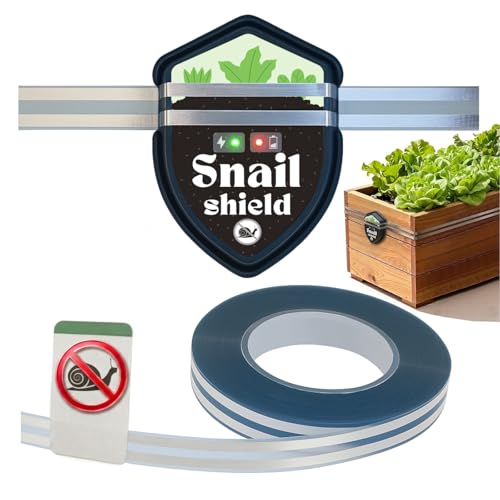
Click the image to see the offer on Amazon
The type of surface you attach the copper to will affect the longevity of your slug barrier. Not all surfaces hold adhesive tape equally well, so it can help to apply double-sided outdoor mounting tape to the surface first. This provides extra support, ensuring the copper stays in place.
For additional security, you can also use specialized copper nails to fasten the tape. This is especially useful for wood surfaces, which can sometimes be tricky for tape alone.
Peaceful Slug Control & Plant Protection
How to Use Copper to Build an Electric Anti-Slug Fence
Some gardeners use copper to create electric slug fences.
By connecting two parallel strips of copper tape or wire to a rechargeable battery, you can effectively deter snails and slugs.
The fence is fairly easy to set up, though it does require some ongoing maintenance.
Keep in mind that the voltage can occasionally be strong enough to kill slugs and snails.
For detailed instructions on installation, you can find more information here: how to install an electric slug fence.
Different Copper Barriers
In addition to copper tape—which you can see in the videos—other options include copper mesh, copper rings, and copper wire.
Copper Mesh Fence
Copper mesh can help protect your plants from slugs, rats, and birds.
To deter slugs, anchor the mesh in the ground with pegs to create a small fence.
It can also be nailed or glued to raised beds and planters for added protection.
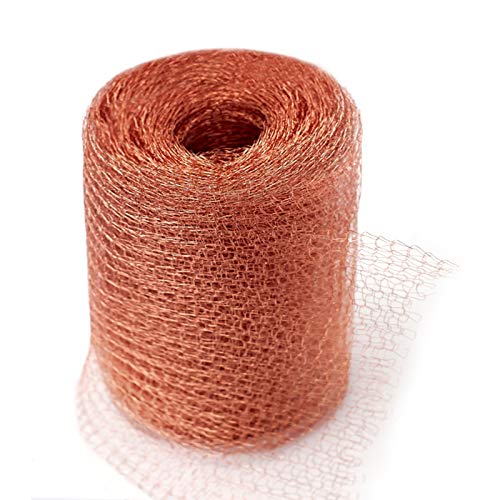
Click the image to see the offer on Amazon.
Copper Slug Rings
Copper rings are placed directly around individual plants on the ground, providing effective protection against slugs.
These rings are particularly popular in the UK, though I found them to be less effective than slug collars.
They may be a bit pricier than copper mesh or tape, but they are more stable and don’t require a surface to be mounted on to work.
Copper Slug & Snail Rings

Click the image to see the offer on Amazon.
General notice
With any snail or slug barrier, it’s essential to remove “bridges” or “ladders” formed by plants.
These connections allow pests to bypass even the most effective barriers.
Ideally, you should prevent these bypasses from the start—for example, by placing mulch next to the barrier.

Disadvantages of Copper
The main limitation of copper is that it is not 100% effective against slugs.
Copper tape, in particular, works best on beds that already have a frame, as open areas require stable enclosures before it can be applied.
While copper can help reduce the impact of a slug infestation, it cannot provide complete protection.

Advantages of Copper
Using copper is entirely harmless, with no negative effects on pests or the environment.
Slugs and snails are neither injured nor killed—they are simply gently repelled.
Copper also poses no additional risks and can even be used decoratively.
One of the biggest advantages is the ease of installation, especially with self-adhesive copper tape—anyone can set it up in just a few minutes.
In addition, copper stands out for its longevity. If it is true that its effectiveness improves as it develops a patina, then copper actually becomes more effective with age.

Conclusion
Copper provides reliable protection for pots, tubs, and planters, though it cannot guarantee complete security.
Its durability and ease of use make it a method I can confidently recommend.
The price per yard (or meter) is generally lower than many other anti-slug solutions, so for those with multiple pots or raised beds, trying copper is a relatively small investment.
While it may not stop every snail or slug, it will keep the majority at bay.
Products & Prices
General
For each type of copper barrier, there are multiple products that are largely similar in function.
However, prices can vary widely, depending on the global market price of copper.
For this reason, comparing prices is not just recommended—it’s essential.
Copper Tape or Foil
As mentioned earlier, the wider the barrier, the more effective it is.
Narrow tape often isn’t sufficient—slugs and snails will usually crawl partially onto it before turning back, and if the tape is too narrow, they can easily reach the other side.
For most pots, planters, and raised beds, a tape width of about two inches (around 5 cm) works best.
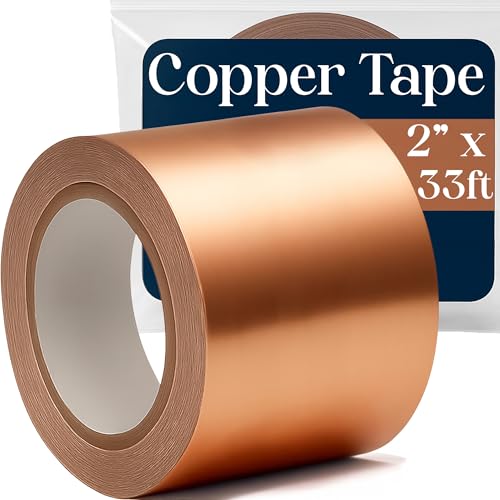
Copper band: 2 inches (ca. 5 cm)
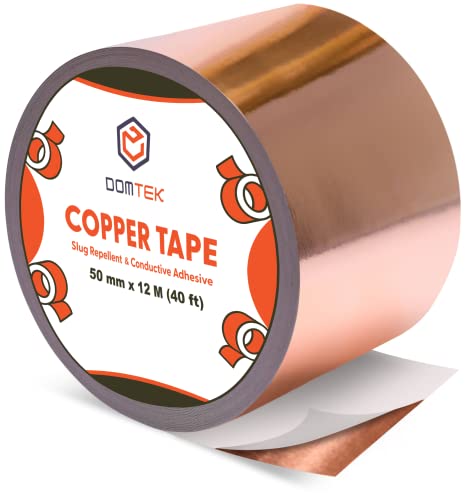
Click the image to see the offer on Amazon.
In addition, copper can be combined with other types of snail control to increase overall protection.
Keep in mind that self-adhesive copper tape is thin and fragile, and its adhesive can deteriorate in poor weather.
To make the barrier more durable, it can be reinforced with copper nails or outdoor mounting tape.


The price of copper tape varies depending on its width and quality, typically ranging from around 0.50 to 2 dollars/pounds/euros per yard (or per meter).
For electric fences, wide tape isn’t necessary—a wire or a narrow strip of tape is sufficient.
Recommendations: Copper Against Slugs & Snails

Alternatives to Copper
Here are some other slug control methods that might interest you:
How to attract natural enemies of slugs
Slug-resistant vegetables and herbs
Peaceful Slug Control & Plant Protection

Mindful consumption: Please buy only what you or your garden truly need.
Did you find the information helpful?
If so, consider sharing this article on social media or linking to it on your blog to help other gardeners discover it. Your support makes a big difference and helps us create even more useful guides.
Thank you for reading—and for spreading the word!
Alternative WaysYou just read about “Copper Against Slugs and Snails”. Not every method suits every garden, so here are gentle alternatives and an overview of what works.
Overview of methods


Attract More Beneficial Wildlife to Your Garden
Turn your garden into an ark for biodiversity. Swipe or scroll sideways →


Promote Biodiversity & Strengthen Natural Balance
Slug-resistant plants


Recommendations | Natural Protection


More Recommendations | Gentle Slug Protection


- Garden Snails & Slug Control | 23+ Measures & Methods - February 1, 2023
- Snails & slugs on the balcony: Where do they come from? What to do? - January 27, 2023
- Does Garlic Help Against Snails & Slugs? | Field Test - January 26, 2023


Sound very good advise. Will try it. Should I put it now in winter or wait until Spring? I live in Southeast TX.
Dear Helen, thank you for your comment. You can put it now or in spring – it doesn´t matter (:
May you have a beautiful day in your garden!
Thanks for the info. I went to Home Depot today and they had copper wire, but no tape.
Does copper band loose its effectiveness over time? It feels that the copper bands we put in last year were working better than this year. If that’s the case, how can I clean them?
Dear Saadia,
thank you for your comment. It is not yet clear if copper is working better or worse over time.
If you want to clean copper you have several options. For example you could use vinegar and salt. Have a look here: https://www.youtube.com/watch?v=NABOvAfC03g
Ketchup, toothpaste, lemon juice and backing powder are also working well (https://www.youtube.com/watch?v=mf-n2eEd08Q).
May you have a beautiful day in your garden,
Alex
The reaction is not so much chemical but electrochemical. The slug gets shocked from ground voltage. Your cake cover was too dry and an insulator. Copper needs electrical connection to the ground. A wet container/ flower pot will likely be 100%
??? Ground voltage = 0 Volts, which is why it’s the reference point for all voltage measurements in electrical systems. If you connect copper tape from your pot to a wire and into the ground, you’ve created a grounding electrode (whatever is in the ground that is conductive), a grounding electrode conductor (wire from electrode in ground to copper tape on pot), and that’s fine. It is not however transferring any voltage either from the earth to the slug/ snail or vice versa. My idea is that if slugs/ snails are repelled by any kind of electrically induced means, it might be that the electrons in the copper atoms in hemocyanin (protein that carries oxygen to cells of invertebrates) might interact with the Valence electrons in the copper strip. In the flow of electrons that we call “electricity” At least that’s how it works
Boy do I have a nasty slug and other pest infestation. I bought 2 inch wide tape and now need to adhere it to something to put around my valuable dahlias. They’ve just demolished it. I wanted to say thank you for this article! I love your tests and your findings but more so, I love that you included helpful products and their links. It makes it so easy to purchase. I believe I might need to create a copper fence to fully protect the entire area as J do have many other plants in the vicinity that I am starting to notice a little damage.
Truthfully, I want them dead. I’ve spent hundreds of dollars on various pellet products and I honestly feel they don’t work. Do you have a particular product you know will work? Does insecticide work at all?
You’re awesome! So glad I found your site. Thank you.
I have used 15mm copper pipe around my raised vegetable planters will this do the job
Hi Stephen,
it will help a little, but it would be good if you could widen the barrier even more.
Good luck!
Alex
Good tips, am going to try this on my raised beds as the slugs are having a time on my radishes this summer! I think the holy grail of 100% efficacy can only be achieved with a combination of tactics. In my case, I’m going with copper tape and a bramble border to prevent them getting into the beds at all, and for the few who make it in, they’ll get the beer trap treatment. Might be overkill, but they really are a pest here.
Do copper barriers have to be lifted in the fall? Or will they continue to be effective under alll of the autumn leaves?
Do wire mesh barriers around plants have to be removed in the fall? I am wondering how they fare during the winter months under leaves and snow…and if I will lose them when do I g spring clean-up.
Thanks